Game Project · Narrative Mystery
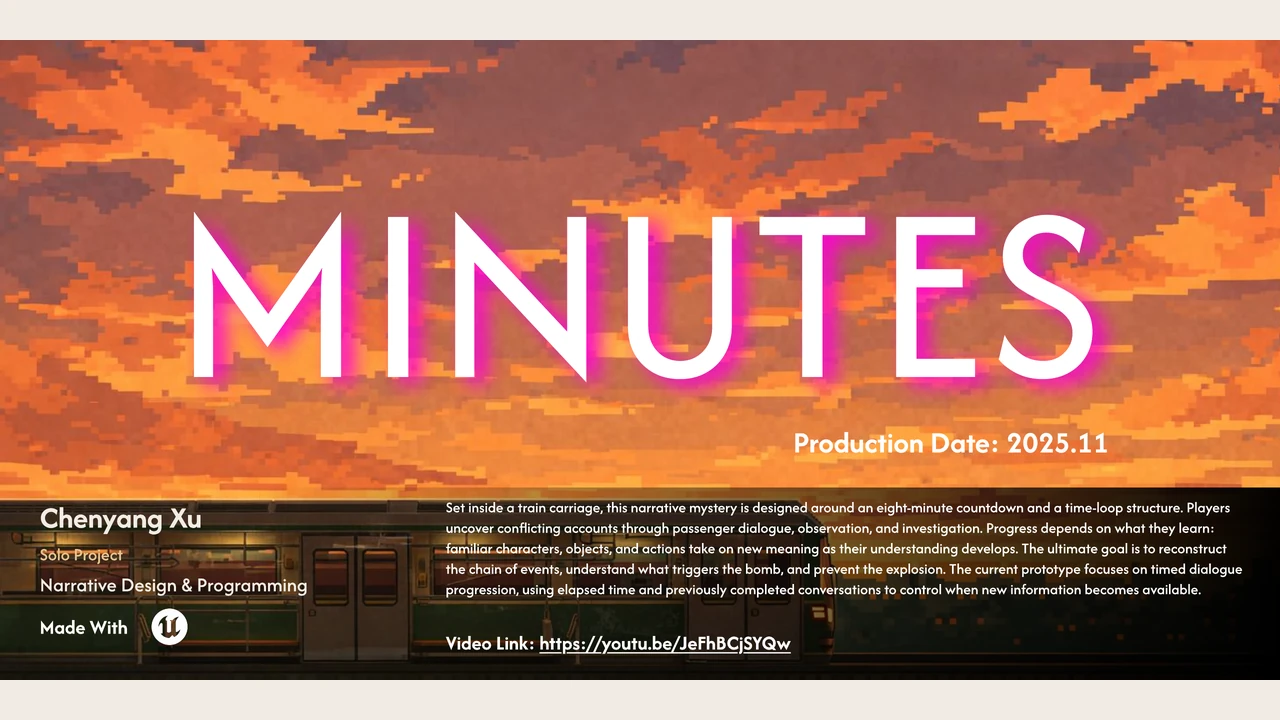
MINUTES
Eight minutes. Three passengers. One suspicious bag. A dialogue-driven mystery about what people reveal, omit, and justify.
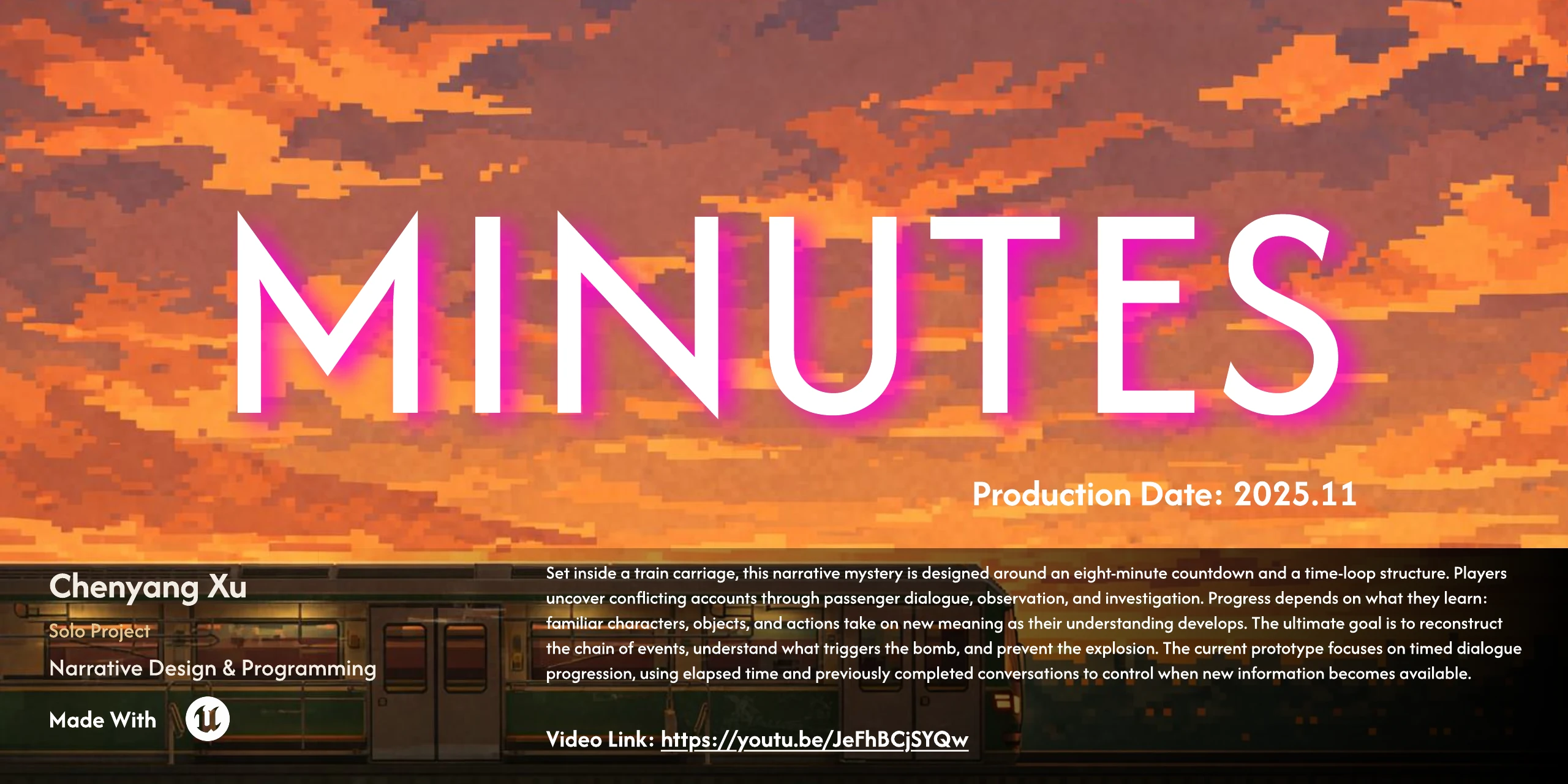
- Role
- Solo developer — narrative design & programming
- Timeline
- November 2025
- Format
- Narrative mystery · Eight-minute countdown & time-loop concept
- Tools
- Unreal Engine · Blueprints · Data Tables
- Status
- Narrative prototype — timed dialogue progression
- Watch
- Gameplay video ↗
Overview
Set inside a train carriage, MINUTES is designed around an eight-minute countdown and a time-loop structure. The player compares passenger accounts to reconstruct the chain of events, understand what triggers a bomb, and prevent the explosion.
The current prototype focuses on timed dialogue progression. Elapsed time and previously completed conversations control when new information becomes available, so a familiar statement can take on a different meaning after another passenger has spoken.
My Role
As a solo project, MINUTES brought together narrative design, Blueprint programming, and HD-2D presentation. I wrote conflicting accounts of the same incident and built a dialogue system that reveals them in stages.
- Narrative design: use ownership, observation, and motivation to make three passengers offer incomplete interpretations of the same bag.
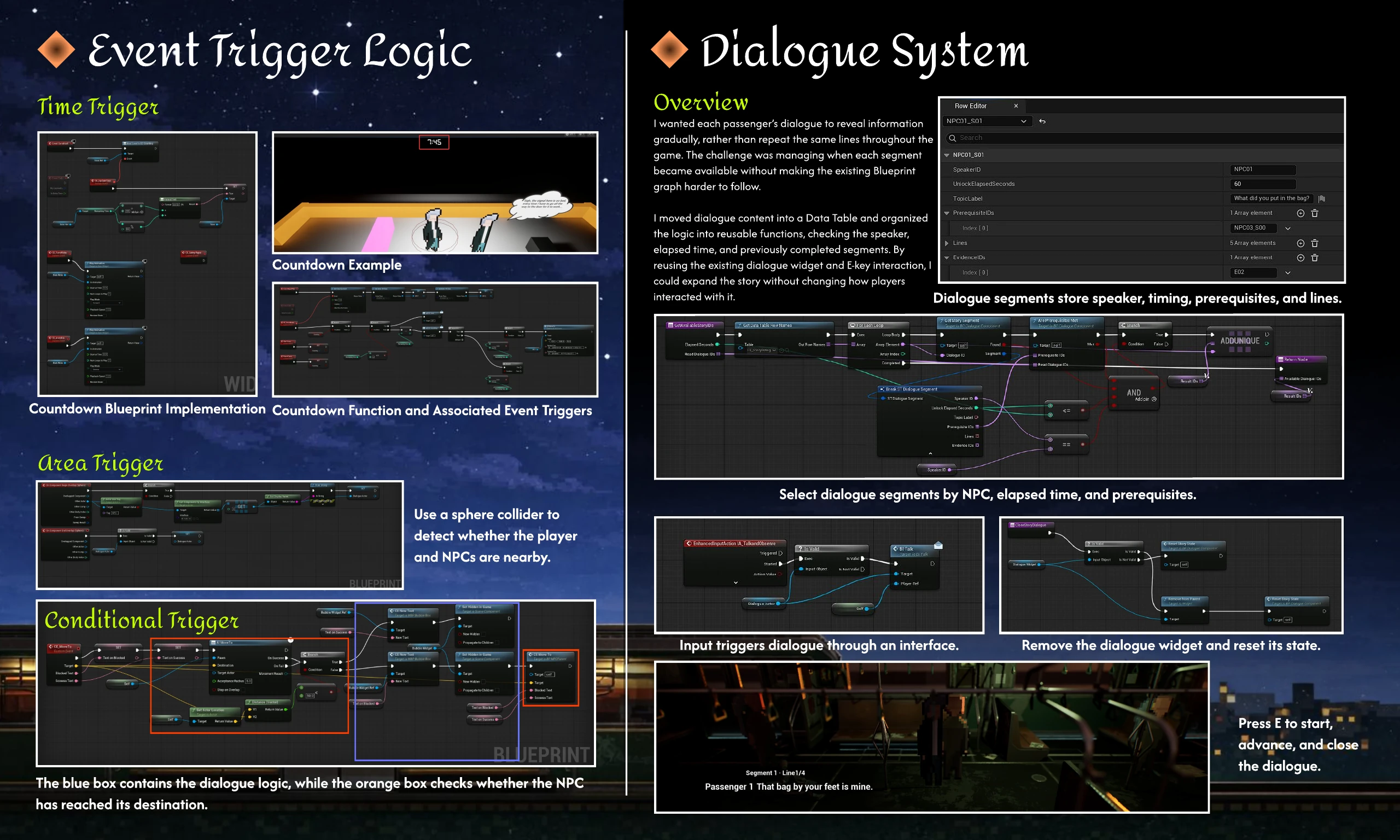
- Dialogue architecture: store speakers, lines, timing, and prerequisites in Data Tables; use reusable Blueprint functions to select available segments.
- Interaction: keep the E-key flow for starting, advancing, and closing dialogue, with speaker identification and reading progress.
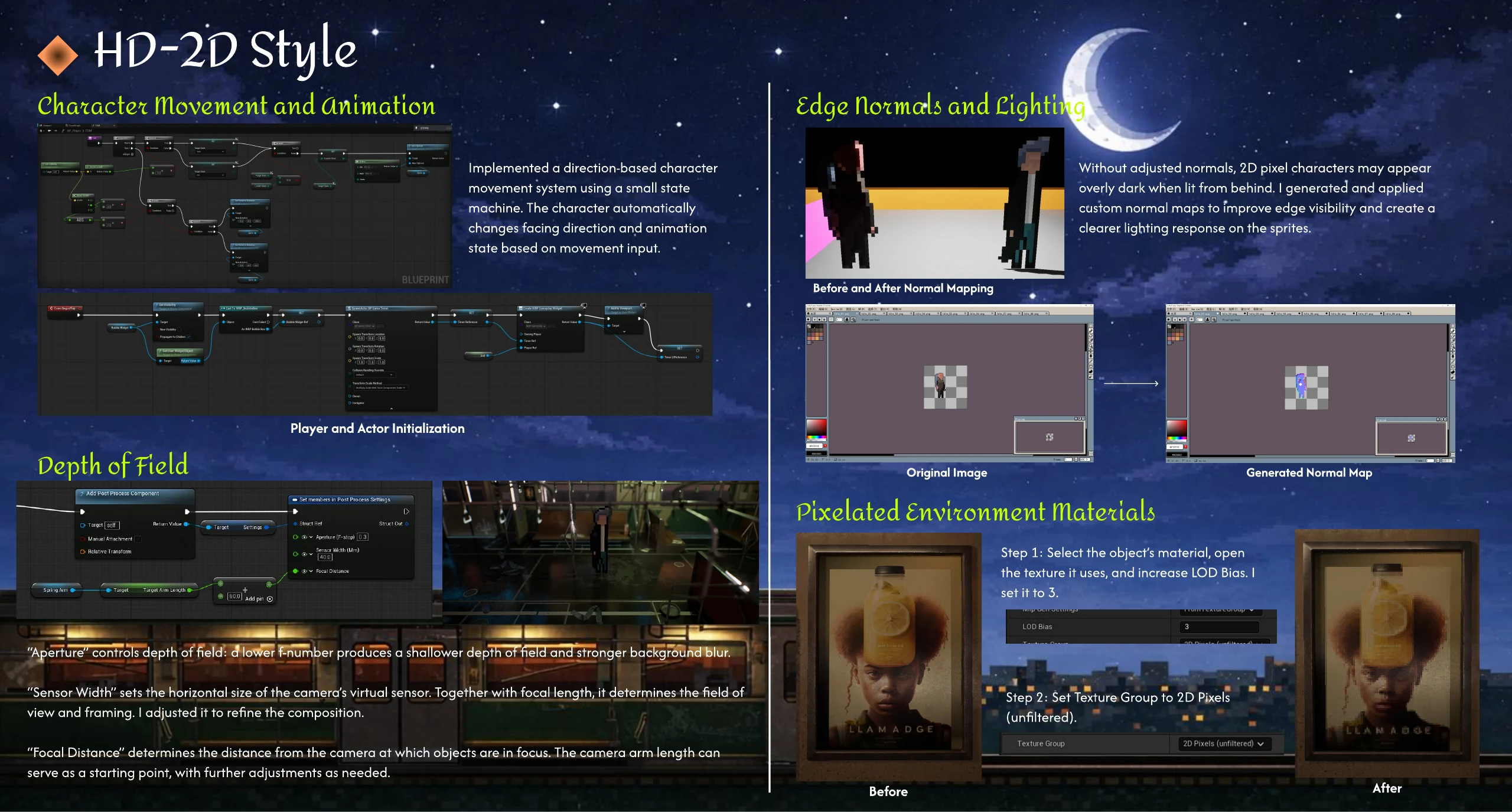
- Character presentation: directional movement and animation states, sprite normal maps, depth of field, and pixelated environment materials.
Project Deck
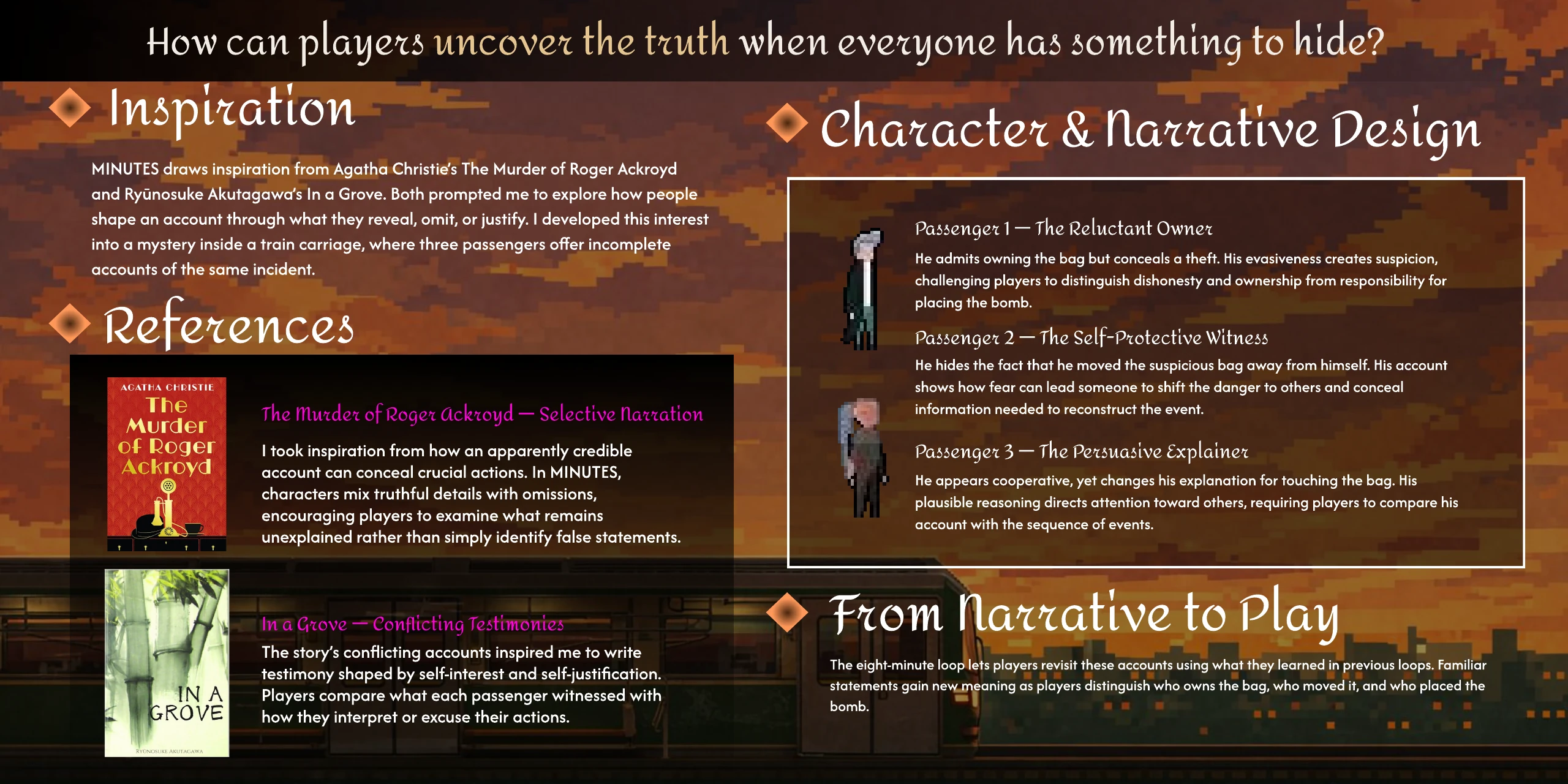
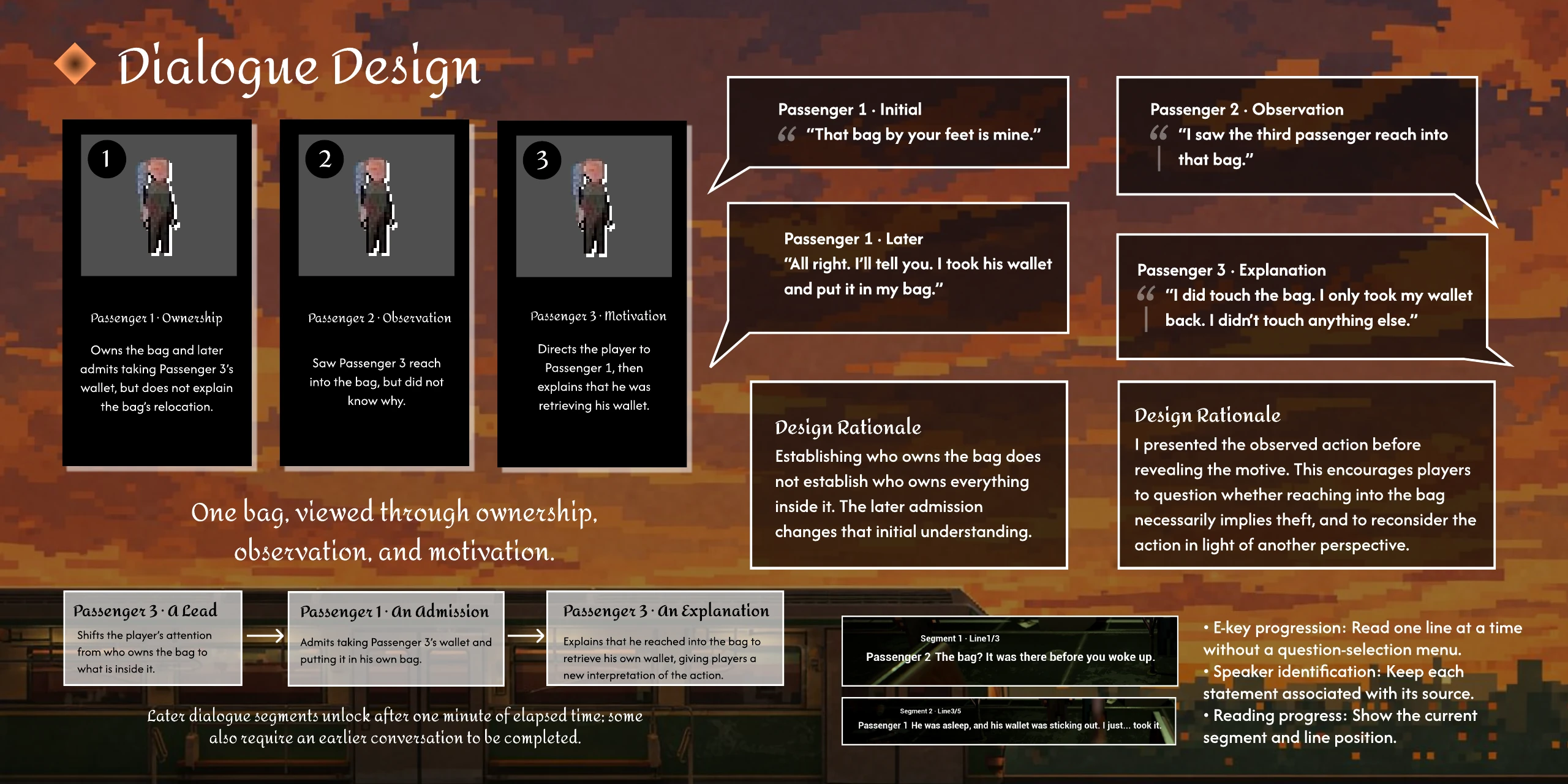
Click any slide to open it at full resolution.
Reflection & Next Steps
Moving dialogue content into Data Tables helped me expand the story while keeping the interaction consistent. The project also gave me practical experience with Unreal Engine events, reusable Blueprint functions, and the relationship between story structure and implementation.
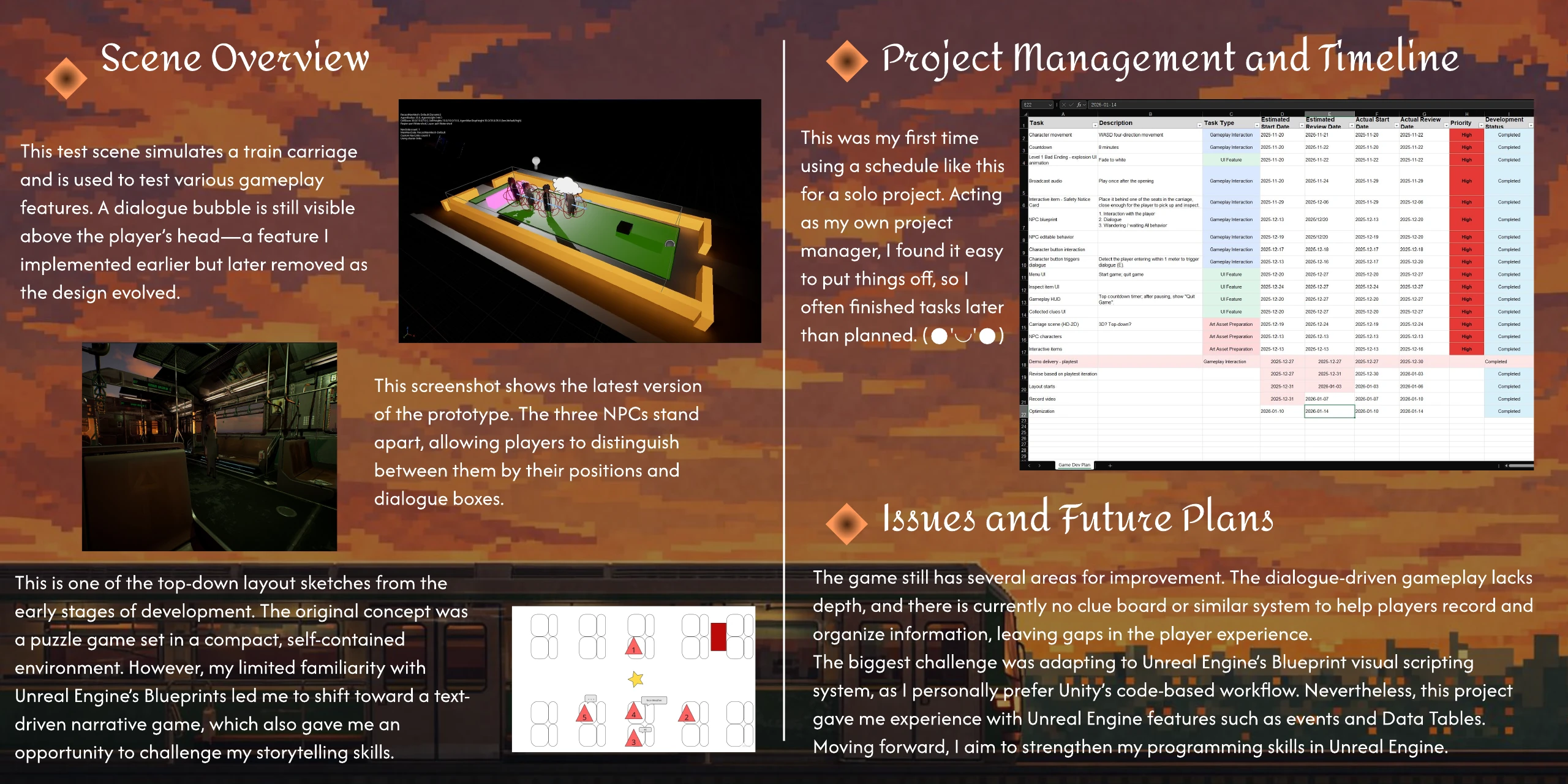
The dialogue-driven gameplay still needs more depth. A clue board or a similar tool could help players record and organize information, making investigation easier to follow. Further work would focus on that player experience and on strengthening my Blueprint programming skills.